
Technology
How IPTV is Transforming Home Entertainment Across the Netherlands: A Complete Practical Guide for Dutch Viewers in 2026

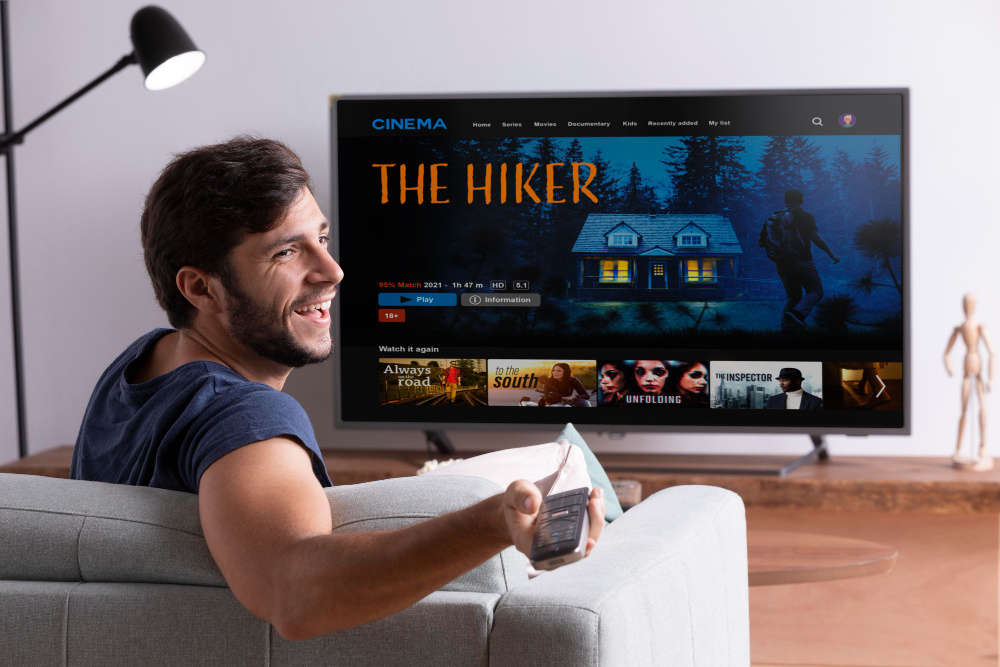
Home entertainment in the Netherlands is undergoing a quiet revolution that is accelerating with each passing month. Millions of Dutch households that once accepted expensive cable television subscriptions from Ziggo and KPN as an unavoidable household expense are discovering that IPTV, Internet Protocol Television, delivers the same content at a fraction of the cost, with greater device flexibility, without binding long-term contracts, and with an international channel selection that traditional Dutch cable providers have never been able to match.
This practical guide is written specifically for Dutch residents throughout the Netherlands who are curious about IPTV and want clear, actionable information. It covers what IPTV is, why it works so well in the Dutch market, what it costs, how to choose a provider, how to set it up, how to troubleshoot problems, and provides honest answers to the questions Nederlandse consumenten ask most frequently before making the switch from traditional cable.
Understanding the Problem: Why Dutch Cable Frustrates Nederlandse Huishoudens
The frustration Dutch consumers feel with traditional television providers is both widespread and well-founded. Ziggo and KPN offer bundled packages that lock Dutch households into 12 to 24-month contracts at prices that have increased year after year. The standard experience for a Dutch household on a Ziggo or KPN television package involves a complex billing structure with a base package price, sports add-on fees, HD service charges, set-top box rental costs, and annual price increase notifications that arrive with frustrating regularity.
When Nederlandse consumenten examine what they actually watch within these expensive packages, the disproportion becomes clear. A typical Dutch household actively watches 6 to 10 channels: NPO 1 for news and public programming, RTL 4 for evening entertainment, SBS6 for reality television, ESPN for football, and perhaps one or two more. The remaining 200 to 400 channels in the cable package serve no regular purpose for the household but are paid for regardless as part of the bundled pricing structure.
Beyond cost, traditional cable is structurally inflexible in ways that conflict with how Dutch households actually live. The television experience is tied to a single set-top box at a fixed location. It does not travel to the vakantiewoning in Zeeland or the mountain apartment for a ski holiday. It cannot simultaneously serve a parent watching NPO Journaal in the living room and a teenager following an Eredivisie match on their phone without additional subscription upgrades. And the entire subscription collapses when the internet goes down, revealing that the distinction between cable television and internet-delivered television is increasingly academic for most Dutch households.
How IPTV Addresses Every One of These Problems
IPTV delivers television content over your existing broadband connection. This means it is device-agnostic (works on your Smart TV, phone, tablet, and computer), location-independent (works anywhere you have internet access), priced competitively (10 to 20 euros per month for comprehensive Dutch packages), and structurally flexible (month-to-month subscriptions with no binding contracts).
For a Dutch household with a fiber connection from KPN or Ziggo in Amsterdam, Rotterdam, Den Haag, Utrecht, Eindhoven, Tilburg, or any of the dozens of Dutch cities with modern broadband infrastructure, IPTV works reliably and delivers a viewing experience that is indistinguishable from cable for the content that most Nederlandse kijkers watch daily. For households in smaller Dutch municipalities or rural provinces including Drenthe, Overijssel, and Zeeland where fiber coverage is less complete, a wired ethernet connection to the streaming device and a speed of at least 15 Mbps supports stable HD streaming.
The Wikipedia article on IPTV explains the technical mechanisms behind this delivery model for readers who want to understand the underlying infrastructure that makes modern IPTV services reliable at the scale serving millions of viewers simultaneously.
The Dutch Internet Infrastructure Advantage
The Netherlands is exceptional among European countries for the quality of its broadband infrastructure. This infrastructure advantage is a critical enabling factor for IPTV adoption at the scale now occurring across the country. According to internet speed measurements published by Speedtest’s Global Index, the Netherlands consistently ranks among Europe’s top performers for both fixed broadband and mobile internet speeds, placing Dutch households in an exceptionally favorable position for data-intensive IPTV streaming.
KPN’s fiber network now covers a substantial majority of Dutch urban households and is expanding into rural provinces. Ziggo’s cable network, upgraded to DOCSIS 3.1 standards, delivers comparable speeds across its extensive coverage area. Regional fiber providers including Delta Fiber, Caiway, Glaspoort, and T-Mobile Fiber are extending competition and coverage into areas previously served by a single operator. The result is that Dutch households across the country have access to the broadband speeds necessary for 4K IPTV streaming on multiple devices simultaneously, at prices that are competitive by European standards.
A City-by-City View: IPTV Across Dutch Communities
Den Haag: Government, Diplomacy, and International Viewers
Den Haag’s unique status as the seat of Dutch government and home to the International Court of Justice, NATO headquarters, numerous embassies, and major international organizations creates a distinctive viewer population. Diplomats, international civil servants, lawyers, and government professionals have above-average requirements for international content access and strong preferences for flexible month-to-month subscriptions that accommodate the transient nature of international professional life.
For viewers in Den Haag, dedicated IPTV services such as IPTV Den Haag are specifically designed to serve the distinctive content needs and viewing patterns of this cosmopolitan city. The combination of Dutch mainstream channels with extensive international packages makes IPTV particularly compelling in a city where households may include viewers from a dozen different countries with correspondingly diverse content preferences.
Amsterdam: Diversity and Density
Amsterdam’s combination of near-total fiber coverage, highly diverse population, and large international community makes it the Netherlands’ leading IPTV adoption market. The city’s neighborhoods each present their own viewer profile: the young professionals of De Pijp and Jordaan, the multicultural communities of Bijlmermeer and Westelijke Tuinsteden, the international expats of the canal belt and Oud-Zuid, and the student neighborhoods surrounding the universities all find compelling reasons to choose IPTV over traditional cable.
Rotterdam: Port City, Global Connections
Rotterdam’s industrial heritage and ongoing status as Europe’s largest port has given the city a deeply international character. The Dutch-Moroccan, Dutch-Turkish, and Dutch-Surinamese communities that have built strong roots in Rotterdam over multiple generations represent IPTV’s most enthusiastic adopters, driven by the international content proposition that no traditional Dutch cable package can match at a comparable price point.
Utrecht and Eindhoven: Students and Innovation
Utrecht’s large student population from Utrecht University, HU University of Applied Sciences, and other institutions creates a highly price-sensitive viewer segment that finds IPTV’s cost and flexibility proposition particularly compelling. Students sharing IPTV subscriptions across multi-connection plans reduce per-person costs to levels that make the switch from any cable alternative straightforward. In Eindhoven, the tech-forward professional community at ASML, Philips, and the broader Brainport ecosystem brings the digital literacy and new-technology adoption mindset that drives early IPTV uptake in the city.
Choosing a Provider: A Complete Evaluation Framework for Dutch Consumers
The Dutch IPTV market has grown rapidly and contains providers across the full quality spectrum. The following framework enables Dutch consumers to consistently identify reliable providers and avoid problematic ones:
Legal and Transparency Indicators
Every credible IPTV provider serving the Nederlandse markt will publish clearly accessible algemene voorwaarden, a GDPR-compliant privacybeleid that explicitly references EU data protection regulations, and a terugbetalingsbeleid covering cancellation and refund conditions. The absence of any of these documents is not an oversight. It is a deliberate signal that the provider does not intend to be held contractually accountable.
Payment Method Acceptance
iDEAL acceptance is the strongest single indicator of a provider operating legitimately within the Dutch market. iDEAL bank partnerships require verified business registration, making it impossible for anonymous operators to accept iDEAL payments. PayPal and major credit cards provide consumer protection mechanisms. Providers that accept only cryptocurrency or bank transfer are operating without any accountability structure.
Trial Subscription Quality
The proefabonnement reveals more about a provider than any marketing material. During the trial, Dutch consumers should specifically test during weekday evenings between 19:00 and 22:00 CET (peak Dutch viewership), verify all channels most important to their household, test the parental control features if relevant, and check catch-up TV functionality for NPO and RTL channels.
Customer Support Responsiveness
Test support before purchasing. Send a pre-sales question via WhatsApp or email and evaluate response time and quality. A provider who responds promptly and accurately to pre-sales questions demonstrates that the support infrastructure exists and functions. One who does not respond, or whose responses are unclear or unhelpful, will not improve after payment is received.
Dutch consumers ready to start exploring should begin with IPTV Nederland providers specifically designed for the Nederlandse markt. When ready to commit, IPTV kopen with a proefabonnement is the only responsible approach for first-time subscribers in the Netherlands.
Complete Setup Guide for Dutch Households
- Speed check: Run speedtest.net. Confirm at least 15 Mbps download for HD, 25 Mbps for 4K. Dutch fiber connections typically deliver 500 Mbps or more, which comfortably supports the most demanding multi-device IPTV household setup.
- Device selection: Samsung, LG, or Philips Smart TV for no additional hardware cost. Amazon Fire Stick (35 to 50 euros at MediaMarkt or Coolblue) for any television without a built-in Smart TV platform. Android phone or tablet for mobile viewing.
- Provider selection: Apply the evaluation framework above. Verify transparency documents, payment method acceptance, and support responsiveness before purchasing.
- App installation: Download IPTV Smarters Pro from your device’s app store. Available free on Samsung, LG, Fire Stick, Android, and iOS platforms.
- Credential entry: Enter the Xtream Codes server URL, username, and password provided by your IPTV provider, or paste your M3U URL. The channel list loads automatically within approximately one minute.
- EPG configuration: Verify that the programme guide shows correct times for Dutch channels. If times are offset by one or two hours, adjust the timezone setting in the app to CET (UTC+1) or CEST (UTC+2) during Dutch zomertijd.
- Connection optimization: Connect your streaming device via ethernet to your router where possible. This eliminates Wi-Fi-related buffering, which is the most common technical issue reported by Dutch IPTV users.
- Systematic testing: Verify NPO channels, sports channels, international packages, parental controls, and catch-up TV during your proefabonnement before cancelling any existing cable subscription.
- Cable cancellation: Contact Ziggo or KPN with the appropriate notice, typically one calendar month. Verify the final billing date to ensure you are not charged for a period after cancellation.
Frequently Asked Questions from Dutch Viewers
Can I use IPTV while traveling within the Netherlands?
Yes. IPTV works anywhere with a stable internet connection. Whether you are at a vakantiewoning in Zeeland, visiting family in Groningen, on a business trip to Eindhoven, or staying in Rotterdam for the weekend, your IPTV subscription works on any supported device you bring with you.
Does IPTV work on my existing television?
If your television is a Samsung, LG, or Philips Smart TV from approximately 2016 or later, it almost certainly supports IPTV apps directly from its built-in app store. Older televisions without Smart TV functionality can be upgraded with an Amazon Fire Stick (35 to 50 euros) or a similar Android TV streaming device that connects via HDMI.
Is there a risk that Dutch IPTV services go offline?
Licensed IPTV providers operating with proper business infrastructure have the same operational stability as any other digital subscription service. The risk of unexpected service termination is highest with unlicensed or anonymous providers that operate without legal accountability. This is another reason why provider selection using the transparency criteria above is essential for Dutch consumers wanting a reliable long-term IPTV service.
Can I watch IPTV in Dutch (Nederlands)?
All major Dutch channels broadcast in Dutch, including NPO 1, NPO 2, NPO 3, RTL 4, SBS6, and regional channels. The IPTV app interface language depends on the specific app used and your device’s language settings. Most IPTV apps used by Dutch viewers including IPTV Smarters Pro support Dutch language settings on compatible devices.
What is the difference between a licensed and unlicensed IPTV service?
A licensed IPTV service has obtained the necessary rights from content rights holders to distribute the channels it offers. It operates within Dutch and EU law, publishes required legal documentation, and accepts standard payment methods. An unlicensed service distributes content without rights holder permission, operates outside legal frameworks, offers no consumer protection, and presents legal risk to users under Dutch copyright law. The practical differences extend beyond legality to service quality, stability, and data security.

Technology
The Inspired by Charles Foundation (IBC Foundation) has launched a digital literacy initiative with a target of training 10,000 Africans by 2030
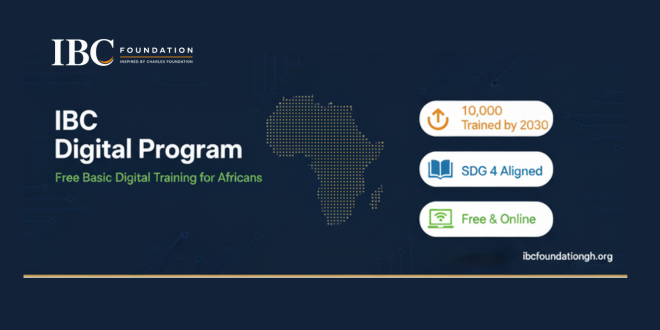
The foundation says the idea came from watching how quickly daily life, work and education have moved online, and how many people have been left struggling to keep up. In parts of Africa, tasks that many people take for granted are still unfamiliar. Writing and sending an email, attaching a résumé, uploading a document or setting up a professional online profile can be real obstacles for someone who has had little exposure to digital tools. When job applications and other opportunities increasingly require these skills, that gap can cost people chances they are otherwise qualified for.
To address this, the foundation has created the IBC Digital Program, which teaches practical skills in four areas: professional email communication, Canva and digital content creation, LinkedIn and building an online professional presence, and artificial intelligence.
The foundation says the aim goes beyond showing people which buttons to press. It wants participants to finish the program comfortable using technology, able to communicate professionally online and willing to go after opportunities they might once have avoided.
The initiative also has a volunteer component. People with strong digital skills are invited to serve as trainers and pass on what they know, which allows the program to reach more learners than a small team could on its own.
Ten thousand learners is a large goal, but the foundation describes the work as happening one person at a time. Each learner who sends a first professional email, uploads a document without help or applies for an opportunity online has gained a skill they can keep using.
The IBC Foundation is starting with digital literacy, with the aim of helping people turn what they learn into real opportunities.
To learn more about the foundation and its mission, visit ibcfoundationgh.org.

IPTV pricing is primary decision factor for cord-cutters evaluating alternatives to cable TV. Annual costs of £20-40 monthly for IPTV versus £70-100 for cable create compelling financial incentive to switch. However, pricing landscape is fragmented: tiered subscriptions, promotional offers, bundling options, hidden costs complicate true cost comparison. Understanding IPTV pricing structure is essential for identifying lowest total-cost-of-ownership option.
Market competition has driven prices down substantially since IPTV’s early days (2010-2015) when premium services cost £50+/month. Today’s competitive landscape features IPTV Smarters pro and dozens of competitors fighting for market share through aggressive pricing. Financial math favors IPTV decisively.
Cable TV Pricing Reality
US cable TV: £165/month average (€150, $165). UK cable: £40-50/month. France cable: €75-95/month. These prices include channels only—premium channels cost additional. Sports packages (usually EUR 15-25/month extra) are expensive. Equipment rental fees (£5-15/month) add up. Installation charges (£50-100 one-time). Promotional rates (first 12 months) are misleading—prices increase dramatically after promotional period ends.
Long-term costs are significant. Five-year cable TV cost: France €4,500-5,700 (at €75-95/month). UK five-year cost: £1,200-1,500. US five-year cost: $9,900-12,000 (£7,900-9,600). These are baseline without premium packages or sports access.
IPTV Service Pricing Breakdown
| Service Type | Monthly Cost | Annual Cost | Primary Content |
|---|---|---|---|
| Cable TV (France) | €75-95 | €900-1,140 | Linear + on-demand TV |
| IPTV Service (Premium) | €35-45 | €420-540 | Linear + VOD + international channels |
| IPTV Service (Standard) | €20-30 | €240-360 | Linear channels, basic VOD |
| IPTV + Netflix + Disney+ | €58-68 | €700-800 | Channels + premium streaming content |
| Streaming Only (3-4 services) | €45-55 | €540-660 | On-demand content only |
Hidden Costs Analysis
Streaming equipment cost: Firestick (£55-65 one-time), Android box (£40-60), or Smart TV (included). These last 3-5 years, amortizing to £1-2/month. Internet upgrade might be required: if connection is under 10 Mbps, upgrade necessary for reliable streaming (£10-20/month typically). VPN optional but recommended (£5-15/month). Device replacement after 5 years (one-time). Total hidden costs: £1-37/month depending on requirements.
Cable hidden costs are often larger: equipment rental (£5-15/month), installation (amortized: £2-3/month), premium channel packages (£15-30/month typical), sports access (£10-25/month typical). Total: £32-73/month in hidden costs beyond base price.
Financial Comparison: Five-Year Total Cost Analysis
Cable TV alone: €4,500-5,700 (France). IPTV Premium + Netflix + Disney+: €700-800/year × 5 = €3,500-4,000. Five-year savings: €500-2,200. Budget IPTV Service: €240-360/year × 5 = €1,200-1,800. Five-year savings: €2,700-4,500. These calculations assume equipment costs amortize within usage period.
Savings increase with family size. Family of four sharing single IPTV subscription: EUR 1,200-1,800 total (per-person EUR 300-450). Cable: EUR 4,500-5,700. Family savings: EUR 2,700-4,500 over five years (EUR 540-900 per person).
Premium vs Budget IPTV Services
Premium services (€35-45/month) typically offer more channels, better reliability, professional support, and regular updates. Services from established providers (Orange TV Now, major international IPTV services). Budget services (€20-30/month) offer core channels but might have reliability issues, limited support, or outdated app interfaces.
https://iptvsmartersprohub.com represents mid-tier approach: professional service (premium features, reliability, support) at moderate pricing. Value proposition: professional-grade service without premium price tag. Similar services compete on this positioning—quality at reasonable cost.
Promotional Pricing Traps
Avoid promotional pricing decisions. Cable TV often advertises €30/month first year, jumping to €80/month year two. Hidden contract cancellation fees (£100-200) trap customers. IPTV promotional pricing: some services offer €9-15/month introductory rates, increasing after 6-12 months. Read terms carefully. Calculate true long-term cost, not promotional rate.
Bundle Strategies
IPTV + streaming combines best of both: IPTV for live television, Netflix/Disney+/Prime for on-demand content. Combined cost (€58-68/month) is cheaper than cable TV (€75-95) while providing superior on-demand content. This bundled approach dominates European market in 2026.
IPTV smarters services bundled with streaming services offer convenience. Some platforms integrate with Netflix, Disney+ within single interface. Evaluate integrated offerings against separate subscriptions for cost comparison.
Frequently Asked Questions
Q: Is IPTV cheaper than cable TV really?
Yes. €35-45 IPTV vs €75-95 cable saves €40-60/month. Annual savings: €480-720. Five-year savings: €2,400-3,600 easily. Bundled IPTV + streaming (€58-68) still saves €10-40/month versus cable. Long-term savings are mathematically undeniable.
Q: What IPTV pricing should I avoid?
Avoid services costing under €10/month (often unreliable, poor support). Avoid services without free trial (no risk-free evaluation). Avoid services with long contract lock-in (prefer month-to-month). Avoid services with auto-renewing subscriptions (difficult to cancel). Reputable services are transparent about pricing and cancellation policy.
Q: Are annual IPTV subscriptions cheaper than monthly?
Usually 10-20% discount for annual prepayment. €35/month = €420/year. Annual discount often reduces to €350-380/year (saving €40-70). Financial advantage is modest. Choose based on commitment comfort level, not price optimization.
Q: What’s cheapest reliable IPTV service?
€20-30/month services are cheapest. Quality varies—some are excellent, others unreliable. Use trial period to test reliability before committing. Paying €35-45/month for premium service you trust beats saving €10-15/month on service experiencing frequent outages.
Technology
Digital Divide in French Education: IPTV Infrastructure Gaps Impact Rural Student Learning
Education & Technology Equity Analysis | August 2026 | 12-minute read
A rural school in Auvergne has 10 Mbps broadband. For 150 students. Peak hours? Maybe 2 Mbps per student if they’re lucky.
Meanwhile, Paris schools have fiber at 100+ Mbps.
This creates outcome disparity that doesn’t make obvious sense: technology quality shouldn’t vary this dramatically within the same country.
Yet it does.
Why Broadband Statistics Lie
“89% of rural France has broadband access” sounds good until you understand threshold: 25 Mbps minimum.
Rural schools operate at 10-15 Mbps. Technically “have broadband.” Practically insufficient for modern curriculum.
Modern curriculum means video-based learning. Science labs recorded as videos. Language instruction from native speakers. History lessons with historical footage. Mathematics walkthroughs.
All require streaming video. IPTV France optimized educational content could theoretically work at lower bandwidth, but requires deployment rural schools don’t have. Services at https://abonnementiptvsmartersproplayer.com/ demonstrate this potential but lack access to rural school infrastructure.
10 Mbps becomes a serious constraint when 30 students simultaneously attempt to watch 1080p educational content. You can’t. Network collapses.
The Cascading Problem
Teachers design curriculum for urban schools (adequate bandwidth). Assign video-based homework.
Rural students attempt homework on inadequate bandwidth. Video buffers. Quality degrades. Content inaccessible.
Rural students don’t do homework. Fall behind. Test scores decline. College preparation suffers.
This isn’t a technology problem. It’s an equity problem masked as technology problem.
Why General Broadband Investment Doesn’t Solve This
Household broadband investment (Fiber-To-The-Home) benefits Netflix consumption. School broadband requirements are different.
Schools need: 100+ Mbps sustained capacity during school hours, reliability (near-zero downtime), optimization for classroom environments (low latency, quality consistency).
Household broadband designed for: variable demand, consumer tolerance for occasional buffering, price optimization.
Requirements misalign. So household fiber deployment doesn’t automatically solve school bandwidth needs.
Rural schools still stuck with insufficient bandwidth despite general broadband expansion. Specialized IPTV smarters infrastructure remains unavailable.
The IPTV Solution (Which Could Actually Work)
Educational IPTV platforms specifically optimize for school environments. Lower bandwidth requirements through efficient streaming protocols, local caching of common content, prioritization of educational uses.
Rural school with 15 Mbps total bandwidth. Deploy IPTV infrastructure locally. Educational content cached on school servers. Bandwidth requirements drop dramatically.
Same school with general-purpose broadband? Can’t stream Netflix efficiently. Can’t stream YouTube reliably. Can stream IPTV-optimized educational content smoothly.
This is structural difference. Educational IPTV designed for constrained bandwidth environments. General streaming designed for unconstrained.
What Actually Needs To Happen (And Won’t)
Schools need dedicated broadband infrastructure investment separate from household deployment.
Governments need to fund school-specific networks requiring 100+ Mbps availability.
Universities need to partner with schools providing educational IPTV content.
None of this is happening with necessary urgency.
Policy discussions focus on household fiber (consumer benefits are obvious). School broadband remains deprioritized (benefits are measurable but less politically visible).
The Equity Problem (Which Is Unresolved)
Technology literacy correlates strongly with future outcomes. Rural students without technology familiarity develop STEM skills slower. College STEM programs remain out of reach. Career options narrow.
Infrastructure gap becomes perpetual disadvantage.
This is solvable. Schools could get adequate infrastructure. Governments could prioritize it. But they’re not.
So rural-urban outcome disparity persists, justified by statistics that claim rural broadband is “adequate.”
It’s not adequate. Just adequate at lying about adequacy.
Frequently Asked Questions
Q: Why can’t rural schools just use Netflix for educational content?
Netflix requires 5-6 Mbps per simultaneous stream. 30 students need 150-180 Mbps. Rural schools have 15 Mbps total. Math doesn’t work.
Q: Can educational content be downloaded instead of streamed?
In theory yes. In practice, pre-downloading requires advanced planning. Teachers can’t assign new content spontaneously. System lacks flexibility.
Q: How much does school-focused broadband infrastructure cost?
Significant. Hundreds of millions for nationwide deployment. But less than lost economic opportunity from rural students falling behind urban peers.
Q: Would IPTV infrastructure actually solve rural education gaps?
Partially. It enables curriculum modernization at constrained bandwidth. But it’s not complete solution. Structural investment in education remains necessary.
Q: Why hasn’t France addressed this gap yet?
Urban bias in policy. Urban voters are larger constituency. Rural problems less politically visible. Classic structural inequality.

The Inspired by Charles Foundation (IBC Foundation) has launched a digital literacy initiative with a target of training 10,000 Africans by 2030

IPTV Pricing 2026: Real Costs Compared to Cable TV and Streaming Services

Digital Divide in French Education: IPTV Infrastructure Gaps Impact Rural Student Learning

Why Choose Leadburst Digital as Your Lead Generation Agency?

Catch-Up TV and Replay on IPTV Smarters Pro: How to Watch Missed French Programmes in 2026

M3U vs Xtream Codes API: Which IPTV Connection Method Works Better for French Subscribers?
Quelle Application IPTV Choisir pour sa Smart TV en France : Comparatif 2026

Why Smaller Teams Are Outperforming Larger Organizations: Sabeer Nelli Explains the Shift

Modern Interior Design Services in Bangkok: Transform Your Space Today

TiviMate Catch-Up TV: How Terugkijken Works for Belgian and Dutch Viewers (And When It Does Not)

Paying for IPTV in the Netherlands: iDEAL, Cancellation Rights, and What Your Provider Owes You
How to Watch Dutch and Belgian TV During Your Vacation (Without a VPN That Half-Works)
IPTV for Dutch Families: Children’s Channels, Parental Controls, and What Parents Actually Need to Know
The Dutch Sports Fan’s Television Problem (And Why IPTV Is the Only Honest Answer)
How IPTV is Transforming Home Entertainment Across the Netherlands: A Complete Practical Guide for Dutch Viewers in 2026
Is Trading Is The Best Investment Option After Retirement?

The Ultimate Guide to 35mm Film Developing Lab

10 Things to Do in Punta Mita

Save on Campervan Rentals with a roadsurfer Gutscheincode

Tailored Tours to Switzerland | Private & VVIP Experiences

Best Things to Do in New York City – Ultimate Travel Guide

Explore New Real Estate Programs in Marrakech

Why is there a white spot on my laptop screen?

How to Be the Best Real Estate Agent Murfreesboro

Find the Best Real Estate Agents Main Line

6×7

Guide to Buying Testosterone Propionate Safely and Effectively

Effective Property Management in Marrakech Morocco

Throne Of Seal Insert E108 Pan Xiuyu

Shana Roberts Northbrook | Discover Her Story
-
 News6 months ago
The Dutch Sports Fan’s Television Problem (And Why IPTV Is the Only Honest Answer)
-
 Technology6 months ago
How to Watch Dutch and Belgian TV During Your Vacation (Without a VPN That Half-Works)
-
Technology6 months ago
The Dutch Viewer’s Complete Guide to IPTV: What It Is, How It Works, What You Can Watch, and What to Expect Before You Start
-
 Technology6 months ago
IPTV for Dutch Families: Children’s Channels, Parental Controls, and What Parents Actually Need to Know
-
Technology6 months ago
Quelle Application IPTV Choisir pour sa Smart TV en France : Comparatif 2026
-
 Technology6 months ago
Paying for IPTV in the Netherlands: iDEAL, Cancellation Rights, and What Your Provider Owes You
-
Technology3 months ago
Catch-Up TV and Replay on IPTV Smarters Pro: How to Watch Missed French Programmes in 2026
-
Technology3 months ago
M3U vs Xtream Codes API: Which IPTV Connection Method Works Better for French Subscribers?