
Technology
8 Factors to Consider Before Buying Ducted AC

Think you know all there is to know about how to find the right Air Conditioning (AC) system? Think again! In this article, we’ll cover some of the things to keep in mind while buying one. We’ll discuss important factors such as your location, room size, and power load, your budget and lifestyle, as well as other things you should consider before you make your final decision. But first up – let’s take a quick look at what an AC system is, how it works and why you need one if you want to cool your home effectively and efficiently.
Research The Brands
There are many brands in the market, and it’s important to do your research before making a purchase. One of the most popular brands is Daikin. Daikin offers several different types of air conditioning systems, so you must know what type of system you need before buying anything.
– Make sure you measure the area where you want to install the unit.
– Find out what type of heating and cooling system will work best for your needs.
– You can also take help of professionals like air conditioning Sydney contractors to find the best system for your place.
Check the Reviews
Many variables go into deciding which ducted AC system is right for you. This can make it difficult to decide which system will work best with your needs. However, considering the reviews given by previous customers can help to make a difference. When shopping for a new system, you should not forget to read reviews about other people’s experiences using the product.
For example, what features did they like? What features did they dislike? How well does the unit work in comparison with others? Was their money worth it? Once you’ve done this research, you’ll be able to more easily compare different models and choose one that fits your specific needs perfectly.
Choose a Brand With The Right Warranty
One of the most common worries for homeowners is whether or not their air conditioner will stop working. There’s no shame in worrying about this as it can happen at any time and without warning! The most important thing you can do is pick an air conditioner with the right warranty. Make sure that your new system comes with at least a 10-year warranty, preferably 20 years if you can find it.
Get it Installed by an Accredited Company
Installing your new air conditioning system is one of the most important things you can do for your home. You want it installed by an accredited company that’s licensed and insured in your area. When looking for an installer, ask about their experience and certifications.
Plan Ahead and Book an Appointment
If you’re planning to install a ducted air conditioning system for the first time, or if you’re replacing an old one, be sure to contact an expert at Home Services 24/7. You should hire a company where the technicians are fully trained and highly experienced such as ducted air conditioning Sydney contractors in HVAC installation and maintenance.
Check if it’s Energy Efficient
Ductless systems are not connected to the home’s duct system and do not have any ducts, so in most cases, they are more energy efficient than traditional systems. For an AC unit to be considered energy efficient, it must meet certain requirements set by the government.
These requirements include being able to reduce power consumption by 10% or more when compared with current standards. Energy efficiency is important because it can lower your utility bill each month while also reducing your carbon footprint.
Think About Cooling
A ducting system needs to be matched with the correct climate control for its environment or else it will not perform adequately. For example, an air conditioner in a humid environment needs a desiccant type of climate control, whereas an air conditioner in a dry environment should have an adsorption type of climate control.
Ask for Recommendations
Can you recommend any brands or models that you’ve heard are good? What should I be considering before buying a new system? What features do you think are important in a new system, such as easy installation, energy efficiency, noise level, or the number of zones it can cool off? How much is your monthly electricity bill for your current system if you don’t mind me asking? You should ask these questions from friends and family.
Final Words
As the summer heats up, many homeowners will be purchasing air conditioners to keep their homes cool during this time of year. Because it’s such an investment, you want to be sure you’re getting one that meets all your needs and expectations. It’s important to know what features will work best with your lifestyle and your budget before making any buying decisions. By considering the above-mentioned tips and tricks, you can easily choose the right style of ducted air conditioning system.

Technology
The Inspired by Charles Foundation (IBC Foundation) has launched a digital literacy initiative with a target of training 10,000 Africans by 2030

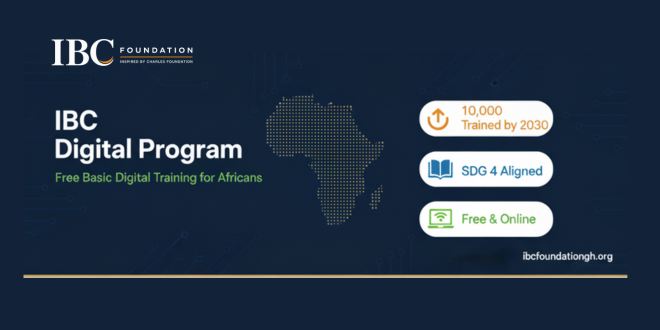
The foundation says the idea came from watching how quickly daily life, work and education have moved online, and how many people have been left struggling to keep up. In parts of Africa, tasks that many people take for granted are still unfamiliar. Writing and sending an email, attaching a résumé, uploading a document or setting up a professional online profile can be real obstacles for someone who has had little exposure to digital tools. When job applications and other opportunities increasingly require these skills, that gap can cost people chances they are otherwise qualified for.
To address this, the foundation has created the IBC Digital Program, which teaches practical skills in four areas: professional email communication, Canva and digital content creation, LinkedIn and building an online professional presence, and artificial intelligence.
The foundation says the aim goes beyond showing people which buttons to press. It wants participants to finish the program comfortable using technology, able to communicate professionally online and willing to go after opportunities they might once have avoided.
The initiative also has a volunteer component. People with strong digital skills are invited to serve as trainers and pass on what they know, which allows the program to reach more learners than a small team could on its own.
Ten thousand learners is a large goal, but the foundation describes the work as happening one person at a time. Each learner who sends a first professional email, uploads a document without help or applies for an opportunity online has gained a skill they can keep using.
The IBC Foundation is starting with digital literacy, with the aim of helping people turn what they learn into real opportunities.
To learn more about the foundation and its mission, visit ibcfoundationgh.org.

IPTV pricing is primary decision factor for cord-cutters evaluating alternatives to cable TV. Annual costs of £20-40 monthly for IPTV versus £70-100 for cable create compelling financial incentive to switch. However, pricing landscape is fragmented: tiered subscriptions, promotional offers, bundling options, hidden costs complicate true cost comparison. Understanding IPTV pricing structure is essential for identifying lowest total-cost-of-ownership option.
Market competition has driven prices down substantially since IPTV’s early days (2010-2015) when premium services cost £50+/month. Today’s competitive landscape features IPTV Smarters pro and dozens of competitors fighting for market share through aggressive pricing. Financial math favors IPTV decisively.
Cable TV Pricing Reality
US cable TV: £165/month average (€150, $165). UK cable: £40-50/month. France cable: €75-95/month. These prices include channels only—premium channels cost additional. Sports packages (usually EUR 15-25/month extra) are expensive. Equipment rental fees (£5-15/month) add up. Installation charges (£50-100 one-time). Promotional rates (first 12 months) are misleading—prices increase dramatically after promotional period ends.
Long-term costs are significant. Five-year cable TV cost: France €4,500-5,700 (at €75-95/month). UK five-year cost: £1,200-1,500. US five-year cost: $9,900-12,000 (£7,900-9,600). These are baseline without premium packages or sports access.
IPTV Service Pricing Breakdown
| Service Type | Monthly Cost | Annual Cost | Primary Content |
|---|---|---|---|
| Cable TV (France) | €75-95 | €900-1,140 | Linear + on-demand TV |
| IPTV Service (Premium) | €35-45 | €420-540 | Linear + VOD + international channels |
| IPTV Service (Standard) | €20-30 | €240-360 | Linear channels, basic VOD |
| IPTV + Netflix + Disney+ | €58-68 | €700-800 | Channels + premium streaming content |
| Streaming Only (3-4 services) | €45-55 | €540-660 | On-demand content only |
Hidden Costs Analysis
Streaming equipment cost: Firestick (£55-65 one-time), Android box (£40-60), or Smart TV (included). These last 3-5 years, amortizing to £1-2/month. Internet upgrade might be required: if connection is under 10 Mbps, upgrade necessary for reliable streaming (£10-20/month typically). VPN optional but recommended (£5-15/month). Device replacement after 5 years (one-time). Total hidden costs: £1-37/month depending on requirements.
Cable hidden costs are often larger: equipment rental (£5-15/month), installation (amortized: £2-3/month), premium channel packages (£15-30/month typical), sports access (£10-25/month typical). Total: £32-73/month in hidden costs beyond base price.
Financial Comparison: Five-Year Total Cost Analysis
Cable TV alone: €4,500-5,700 (France). IPTV Premium + Netflix + Disney+: €700-800/year × 5 = €3,500-4,000. Five-year savings: €500-2,200. Budget IPTV Service: €240-360/year × 5 = €1,200-1,800. Five-year savings: €2,700-4,500. These calculations assume equipment costs amortize within usage period.
Savings increase with family size. Family of four sharing single IPTV subscription: EUR 1,200-1,800 total (per-person EUR 300-450). Cable: EUR 4,500-5,700. Family savings: EUR 2,700-4,500 over five years (EUR 540-900 per person).
Premium vs Budget IPTV Services
Premium services (€35-45/month) typically offer more channels, better reliability, professional support, and regular updates. Services from established providers (Orange TV Now, major international IPTV services). Budget services (€20-30/month) offer core channels but might have reliability issues, limited support, or outdated app interfaces.
https://iptvsmartersprohub.com represents mid-tier approach: professional service (premium features, reliability, support) at moderate pricing. Value proposition: professional-grade service without premium price tag. Similar services compete on this positioning—quality at reasonable cost.
Promotional Pricing Traps
Avoid promotional pricing decisions. Cable TV often advertises €30/month first year, jumping to €80/month year two. Hidden contract cancellation fees (£100-200) trap customers. IPTV promotional pricing: some services offer €9-15/month introductory rates, increasing after 6-12 months. Read terms carefully. Calculate true long-term cost, not promotional rate.
Bundle Strategies
IPTV + streaming combines best of both: IPTV for live television, Netflix/Disney+/Prime for on-demand content. Combined cost (€58-68/month) is cheaper than cable TV (€75-95) while providing superior on-demand content. This bundled approach dominates European market in 2026.
IPTV smarters services bundled with streaming services offer convenience. Some platforms integrate with Netflix, Disney+ within single interface. Evaluate integrated offerings against separate subscriptions for cost comparison.
Frequently Asked Questions
Q: Is IPTV cheaper than cable TV really?
Yes. €35-45 IPTV vs €75-95 cable saves €40-60/month. Annual savings: €480-720. Five-year savings: €2,400-3,600 easily. Bundled IPTV + streaming (€58-68) still saves €10-40/month versus cable. Long-term savings are mathematically undeniable.
Q: What IPTV pricing should I avoid?
Avoid services costing under €10/month (often unreliable, poor support). Avoid services without free trial (no risk-free evaluation). Avoid services with long contract lock-in (prefer month-to-month). Avoid services with auto-renewing subscriptions (difficult to cancel). Reputable services are transparent about pricing and cancellation policy.
Q: Are annual IPTV subscriptions cheaper than monthly?
Usually 10-20% discount for annual prepayment. €35/month = €420/year. Annual discount often reduces to €350-380/year (saving €40-70). Financial advantage is modest. Choose based on commitment comfort level, not price optimization.
Q: What’s cheapest reliable IPTV service?
€20-30/month services are cheapest. Quality varies—some are excellent, others unreliable. Use trial period to test reliability before committing. Paying €35-45/month for premium service you trust beats saving €10-15/month on service experiencing frequent outages.
Technology
Digital Divide in French Education: IPTV Infrastructure Gaps Impact Rural Student Learning
Education & Technology Equity Analysis | August 2026 | 12-minute read
A rural school in Auvergne has 10 Mbps broadband. For 150 students. Peak hours? Maybe 2 Mbps per student if they’re lucky.
Meanwhile, Paris schools have fiber at 100+ Mbps.
This creates outcome disparity that doesn’t make obvious sense: technology quality shouldn’t vary this dramatically within the same country.
Yet it does.
Why Broadband Statistics Lie
“89% of rural France has broadband access” sounds good until you understand threshold: 25 Mbps minimum.
Rural schools operate at 10-15 Mbps. Technically “have broadband.” Practically insufficient for modern curriculum.
Modern curriculum means video-based learning. Science labs recorded as videos. Language instruction from native speakers. History lessons with historical footage. Mathematics walkthroughs.
All require streaming video. IPTV France optimized educational content could theoretically work at lower bandwidth, but requires deployment rural schools don’t have. Services at https://abonnementiptvsmartersproplayer.com/ demonstrate this potential but lack access to rural school infrastructure.
10 Mbps becomes a serious constraint when 30 students simultaneously attempt to watch 1080p educational content. You can’t. Network collapses.
The Cascading Problem
Teachers design curriculum for urban schools (adequate bandwidth). Assign video-based homework.
Rural students attempt homework on inadequate bandwidth. Video buffers. Quality degrades. Content inaccessible.
Rural students don’t do homework. Fall behind. Test scores decline. College preparation suffers.
This isn’t a technology problem. It’s an equity problem masked as technology problem.
Why General Broadband Investment Doesn’t Solve This
Household broadband investment (Fiber-To-The-Home) benefits Netflix consumption. School broadband requirements are different.
Schools need: 100+ Mbps sustained capacity during school hours, reliability (near-zero downtime), optimization for classroom environments (low latency, quality consistency).
Household broadband designed for: variable demand, consumer tolerance for occasional buffering, price optimization.
Requirements misalign. So household fiber deployment doesn’t automatically solve school bandwidth needs.
Rural schools still stuck with insufficient bandwidth despite general broadband expansion. Specialized IPTV smarters infrastructure remains unavailable.
The IPTV Solution (Which Could Actually Work)
Educational IPTV platforms specifically optimize for school environments. Lower bandwidth requirements through efficient streaming protocols, local caching of common content, prioritization of educational uses.
Rural school with 15 Mbps total bandwidth. Deploy IPTV infrastructure locally. Educational content cached on school servers. Bandwidth requirements drop dramatically.
Same school with general-purpose broadband? Can’t stream Netflix efficiently. Can’t stream YouTube reliably. Can stream IPTV-optimized educational content smoothly.
This is structural difference. Educational IPTV designed for constrained bandwidth environments. General streaming designed for unconstrained.
What Actually Needs To Happen (And Won’t)
Schools need dedicated broadband infrastructure investment separate from household deployment.
Governments need to fund school-specific networks requiring 100+ Mbps availability.
Universities need to partner with schools providing educational IPTV content.
None of this is happening with necessary urgency.
Policy discussions focus on household fiber (consumer benefits are obvious). School broadband remains deprioritized (benefits are measurable but less politically visible).
The Equity Problem (Which Is Unresolved)
Technology literacy correlates strongly with future outcomes. Rural students without technology familiarity develop STEM skills slower. College STEM programs remain out of reach. Career options narrow.
Infrastructure gap becomes perpetual disadvantage.
This is solvable. Schools could get adequate infrastructure. Governments could prioritize it. But they’re not.
So rural-urban outcome disparity persists, justified by statistics that claim rural broadband is “adequate.”
It’s not adequate. Just adequate at lying about adequacy.
Frequently Asked Questions
Q: Why can’t rural schools just use Netflix for educational content?
Netflix requires 5-6 Mbps per simultaneous stream. 30 students need 150-180 Mbps. Rural schools have 15 Mbps total. Math doesn’t work.
Q: Can educational content be downloaded instead of streamed?
In theory yes. In practice, pre-downloading requires advanced planning. Teachers can’t assign new content spontaneously. System lacks flexibility.
Q: How much does school-focused broadband infrastructure cost?
Significant. Hundreds of millions for nationwide deployment. But less than lost economic opportunity from rural students falling behind urban peers.
Q: Would IPTV infrastructure actually solve rural education gaps?
Partially. It enables curriculum modernization at constrained bandwidth. But it’s not complete solution. Structural investment in education remains necessary.
Q: Why hasn’t France addressed this gap yet?
Urban bias in policy. Urban voters are larger constituency. Rural problems less politically visible. Classic structural inequality.

The Inspired by Charles Foundation (IBC Foundation) has launched a digital literacy initiative with a target of training 10,000 Africans by 2030

IPTV Pricing 2026: Real Costs Compared to Cable TV and Streaming Services

Digital Divide in French Education: IPTV Infrastructure Gaps Impact Rural Student Learning

Why Choose Leadburst Digital as Your Lead Generation Agency?

Catch-Up TV and Replay on IPTV Smarters Pro: How to Watch Missed French Programmes in 2026

M3U vs Xtream Codes API: Which IPTV Connection Method Works Better for French Subscribers?
Quelle Application IPTV Choisir pour sa Smart TV en France : Comparatif 2026

Why Smaller Teams Are Outperforming Larger Organizations: Sabeer Nelli Explains the Shift

Modern Interior Design Services in Bangkok: Transform Your Space Today

TiviMate Catch-Up TV: How Terugkijken Works for Belgian and Dutch Viewers (And When It Does Not)

Paying for IPTV in the Netherlands: iDEAL, Cancellation Rights, and What Your Provider Owes You
How to Watch Dutch and Belgian TV During Your Vacation (Without a VPN That Half-Works)
IPTV for Dutch Families: Children’s Channels, Parental Controls, and What Parents Actually Need to Know
The Dutch Sports Fan’s Television Problem (And Why IPTV Is the Only Honest Answer)
How IPTV is Transforming Home Entertainment Across the Netherlands: A Complete Practical Guide for Dutch Viewers in 2026
Is Trading Is The Best Investment Option After Retirement?

The Ultimate Guide to 35mm Film Developing Lab

Save on Campervan Rentals with a roadsurfer Gutscheincode

10 Things to Do in Punta Mita

Tailored Tours to Switzerland | Private & VVIP Experiences

Explore New Real Estate Programs in Marrakech

Best Things to Do in New York City – Ultimate Travel Guide

How to Be the Best Real Estate Agent Murfreesboro

Why is there a white spot on my laptop screen?

Find the Best Real Estate Agents Main Line

6×7

Effective Property Management in Marrakech Morocco

Guide to Buying Testosterone Propionate Safely and Effectively

Throne Of Seal Insert E108 Pan Xiuyu

Why WWE Saturday Night Main Event Was So Popular
-
 News7 months ago
The Dutch Sports Fan’s Television Problem (And Why IPTV Is the Only Honest Answer)
-
 Technology7 months ago
How to Watch Dutch and Belgian TV During Your Vacation (Without a VPN That Half-Works)
-
 Technology7 months ago
IPTV for Dutch Families: Children’s Channels, Parental Controls, and What Parents Actually Need to Know
-
Technology7 months ago
Quelle Application IPTV Choisir pour sa Smart TV en France : Comparatif 2026
-
Technology5 months ago
Catch-Up TV and Replay on IPTV Smarters Pro: How to Watch Missed French Programmes in 2026
-
 Technology7 months ago
Paying for IPTV in the Netherlands: iDEAL, Cancellation Rights, and What Your Provider Owes You
-
Technology5 months ago
M3U vs Xtream Codes API: Which IPTV Connection Method Works Better for French Subscribers?
-
 General7 months ago
Why Smaller Teams Are Outperforming Larger Organizations: Sabeer Nelli Explains the Shift